
A single error on your credit report can cost you thousands in higher interest rates and rejected loan applications. Yet millions of Americans carry inaccurate records without realizing it.
At Bontrager Law, we’ve helped countless people fix these mistakes and reclaim their financial standing. This guide walks you through correcting credit report errors step by step.
Understanding Credit Report Errors
The Four Sections Where Errors Hide
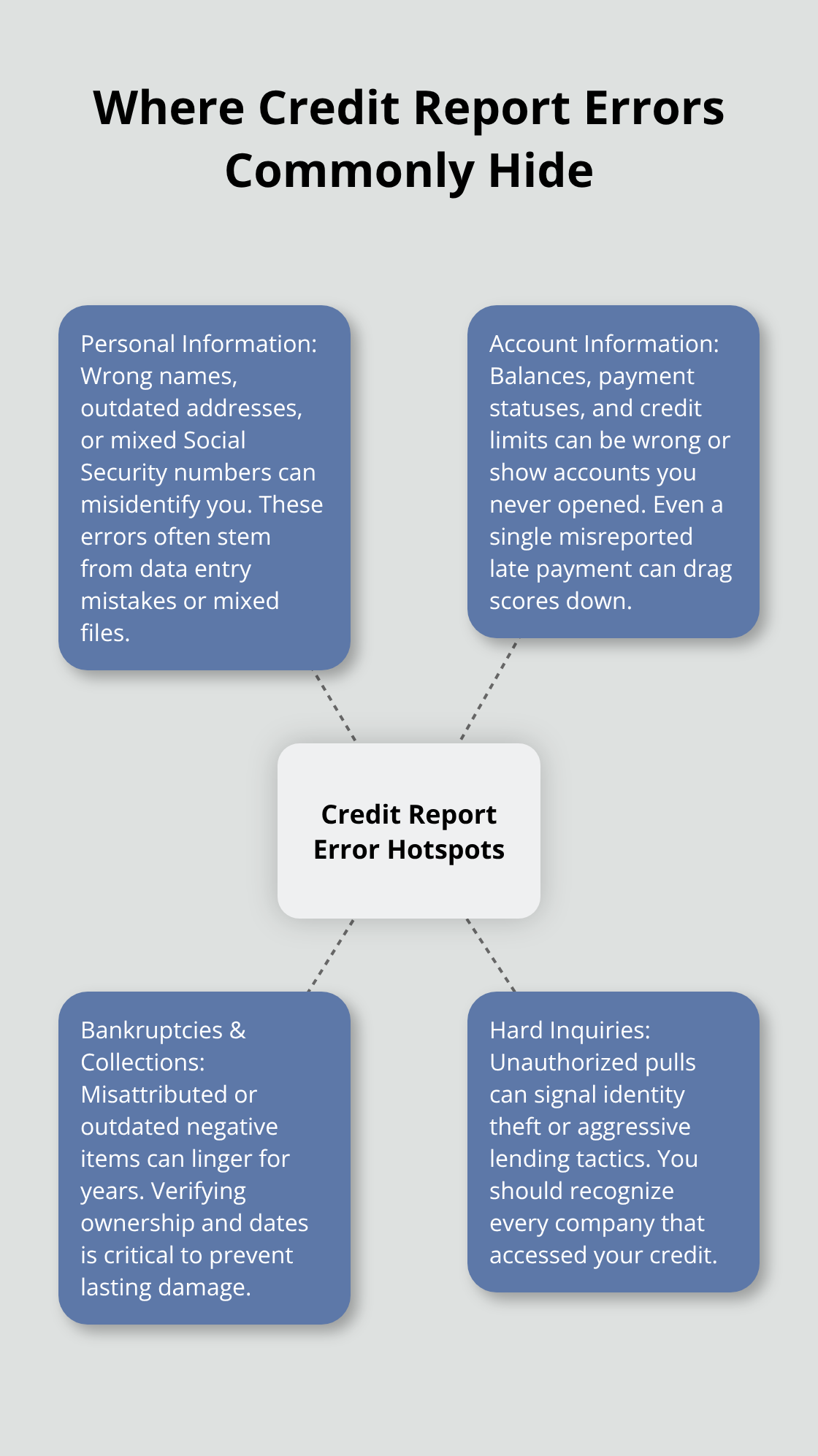
Credit reports contain four main sections, and errors can hide in any of them. Personal information at the top should match your current identity-wrong names, outdated addresses, or confused Social Security numbers appear frequently. Account information lists your credit cards, loans, and payment history, and this section often contains mistakes like accounts you never opened, incorrect balances, or payments marked late when you paid on time. Bankruptcies and collections appear separately, and these errors hurt most because they stay visible for years. Hard inquiries round out the report, showing which companies pulled your credit-and unauthorized inquiries can signal identity theft or predatory lending tactics.
How Errors Damage Your Financial Life
The financial damage from these errors is substantial and immediate. According to the Federal Trade Commission, one in five Americans has an error on at least one of their credit reports. A single error on your credit report can tank your score, which translates directly into higher interest rates on mortgages, auto loans, and credit cards. Someone with a 50-point score drop might pay an extra $10,000 in interest over the life of a 30-year mortgage. Errors also trigger loan denials, higher insurance premiums, and employment rejections since many employers review credit reports during hiring.
Why These Errors Occur
The mistakes typically stem from four sources. Data entry errors by creditors happen when staff members input information incorrectly into the system. Identity theft occurs when someone opens accounts in your name without permission. Mixed files happen when your information gets tangled with another person’s records. Reporting delays cause payments to take weeks to update, creating temporary inaccuracies that should resolve on their own. A single wrong late payment notation can trigger a cascade of rejections and financial penalties that take years to undo.
Understanding where errors hide and how they form is the first step toward fixing them. The next section shows you how to obtain your credit reports and spot these problems before they damage your finances further.
Getting Your Credit Reports and Filing Disputes
Obtain Reports from All Three Bureaus
You must pull your credit reports from Equifax, Experian, and TransUnion to see the full picture of your credit history. AnnualCreditReport.com provides free reports once yearly through the federally mandated program, but this annual approach leaves you unprotected for 11 months. A stronger strategy involves requesting one report every four months from a different bureau, which creates continuous monitoring throughout the year. Equifax offers free daily access to your credit report and VantageScore through myEquifax, eliminating uncertainty about where problems exist.
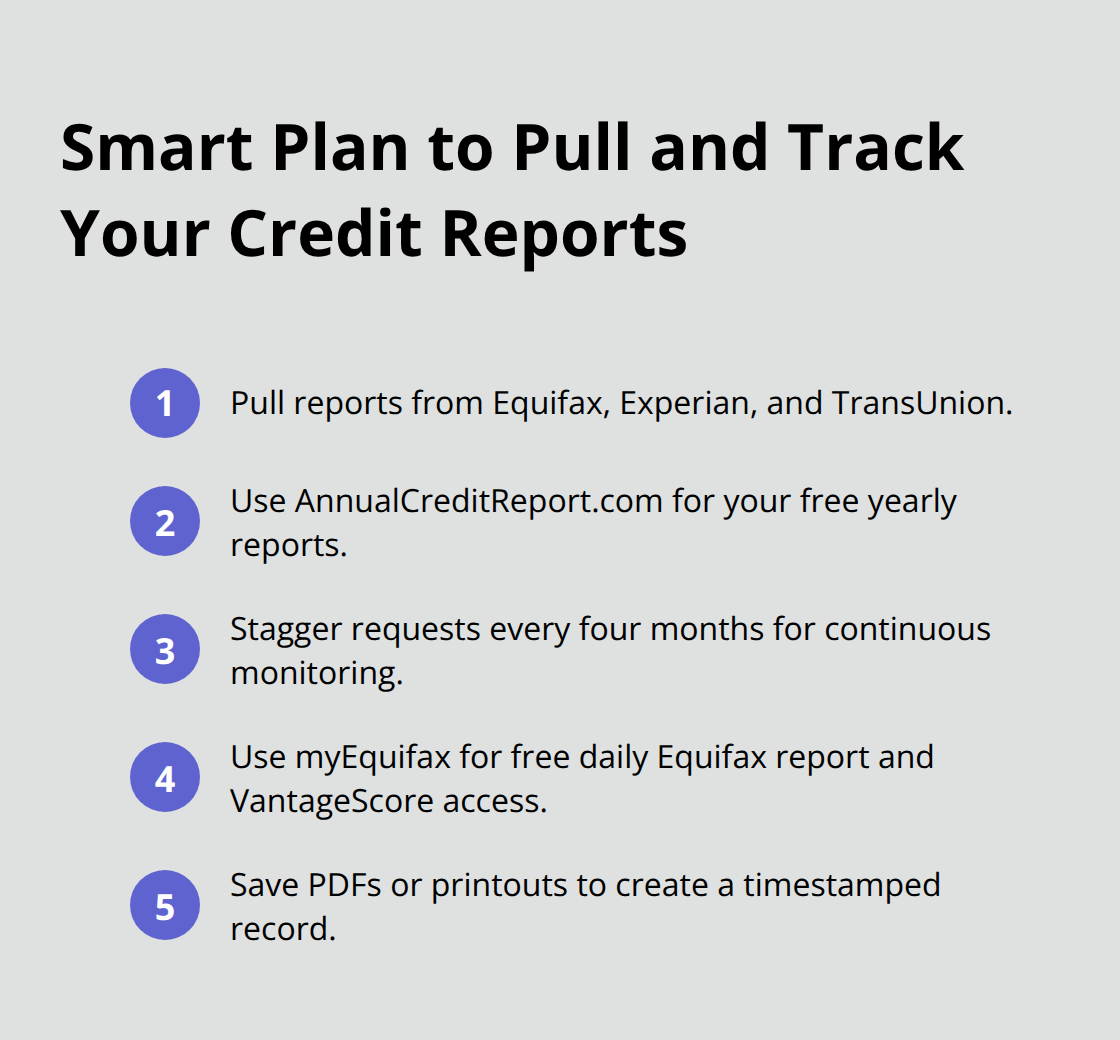
Once you have your reports, print them or save them as PDFs for documentation. This creates a timestamped record that matters if you later need to prove when you discovered the error.
Review Each Section Systematically
Reviewing your reports demands systematic attention to all four sections. Start with personal information and verify your name, address, Social Security number, and employment history match your current records exactly. Next, examine every account listed under account information, checking that balances are accurate, payment statuses are correct, and credit limits match what you agreed to with each lender. Look for accounts you never opened-these signal identity theft and require immediate action. The bankruptcies and collections section causes the most damage when errors appear here, so confirm any negative items actually belong to you and that dates are accurate. Hard inquiries should only show companies you actually authorized to pull your credit. When you spot an error, document it with screenshots or printed pages showing the exact inaccuracy.
File Disputes with the Bureau and Creditor
File a dispute directly with Equifax through myEquifax using their File A Dispute function (this takes minutes). You receive a 10-digit confirmation code immediately, which you should save for your records. Equifax completes investigations within 30 days and will update your report if the information cannot be verified by the reporting creditor. For errors that persist after the initial dispute or require additional documentation, contact the creditor or lender directly in writing, including copies of supporting documents like utility bills, bank statements, or proof of identity theft. This dual approach-disputing with the bureau and the creditor simultaneously-accelerates corrections and creates a paper trail that protects you if the error resurfaces later.
Your legal rights during this process are stronger than most people realize, and understanding what protections apply to you can make the difference between a quick resolution and months of frustration.
Your Legal Rights and Options
What the Fair Credit Reporting Act Actually Protects
The Fair Credit Reporting Act gives you concrete legal protections that most people never use. Congress passed this federal law in 1970 to hold credit bureaus accountable for maintaining accurate information, and it stands as your strongest weapon when errors persist. The FCRA requires Equifax, Experian, and TransUnion to investigate disputes within 30 days and remove information they cannot verify. This means if a creditor fails to respond to the bureau’s investigation, that item must come off your report-no exceptions. The law also prohibits bureaus from reporting inaccurate information knowingly or through negligence, which matters because it creates liability when they ignore clear evidence of errors.
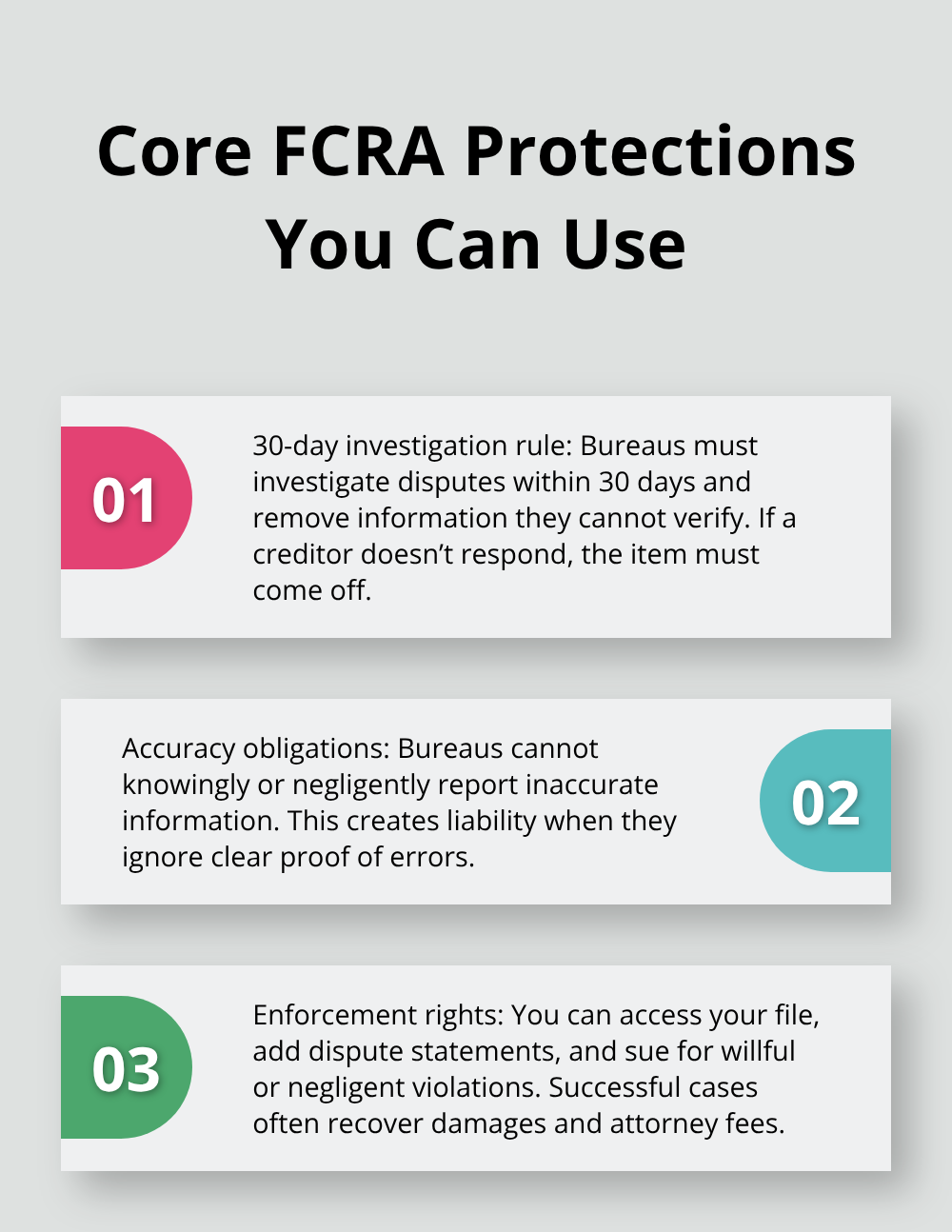
You have the right to know what’s in your file, receive free reports annually, and add a statement explaining your side of disputed items. Most importantly, the FCRA allows you to sue credit bureaus for willful or negligent violations, and successful lawsuits often result in damages plus attorney fees. This legal foundation shifts power in your favor because bureaus know that ignoring disputes can trigger expensive litigation.
How Timelines Work in Your Favor
Timelines matter intensely in credit reporting disputes because delays cost you money every single day. Equifax must complete investigations within 30 days of receiving your dispute, though this clock only starts when they actually receive your documentation. Credit bureaus sometimes claim they never received your materials, which is why sending disputes through certified mail with return receipt creates proof of delivery. If the bureau investigates but the creditor doesn’t respond within 30 days, the item must be deleted regardless of whether it’s accurate-this is a hard rule under FCRA regulations. After the bureau updates your report, request a corrected copy and send it to any lenders who recently rejected you, since they may reconsider based on your corrected information.
When Errors Resurface and What to Do
If errors resurface within two years, you can file a second dispute immediately. When a bureau ignores your dispute, fails to investigate, or re-reports deleted items, that’s when you need legal representation. We represent California residents in these situations and can evaluate whether your case qualifies for a lawsuit that recovers damages and attorney fees. The cost of hiring representation often gets covered through your settlement, making professional help financially smart when standard disputes fail.
Final Thoughts
Pull your reports from all three bureaus this week and start correcting credit report errors before they compound into years of financial damage. Most people wait months or years before checking their credit, which means inaccuracies silently tank their scores and trigger loan rejections. File a dispute through Equifax’s myEquifax platform the moment you spot an error, and send written documentation to the creditor simultaneously-this dual approach creates accountability on both sides and accelerates corrections.
Track your confirmation codes and keep copies of all correspondence throughout the 30-day investigation window. Standard disputes resolve most errors, but if inaccuracies resurface within two years or the bureau ignores your dispute, professional representation becomes necessary. We at Bontrager Law represent California residents in these situations and can evaluate whether your case qualifies for legal action that recovers damages and attorney fees through a free case review.
Your corrected credit report opens doors to better interest rates, approved loans, and financial opportunities you’ve been denied. The effort required is minimal compared to the financial benefit you’ll gain from accurate records.