
Identity theft is one of the fastest-growing crimes in California. In 2024, California residents filed over 300,000 identity theft complaints, making it the state with the highest number of cases nationwide.
We at Bontrager Law understand how devastating this crime can be. This guide covers identity theft consumer protection strategies, your legal rights, and practical steps to safeguard your personal information.
The Real Cost of Identity Theft in California
Financial Damage That Lasts Years
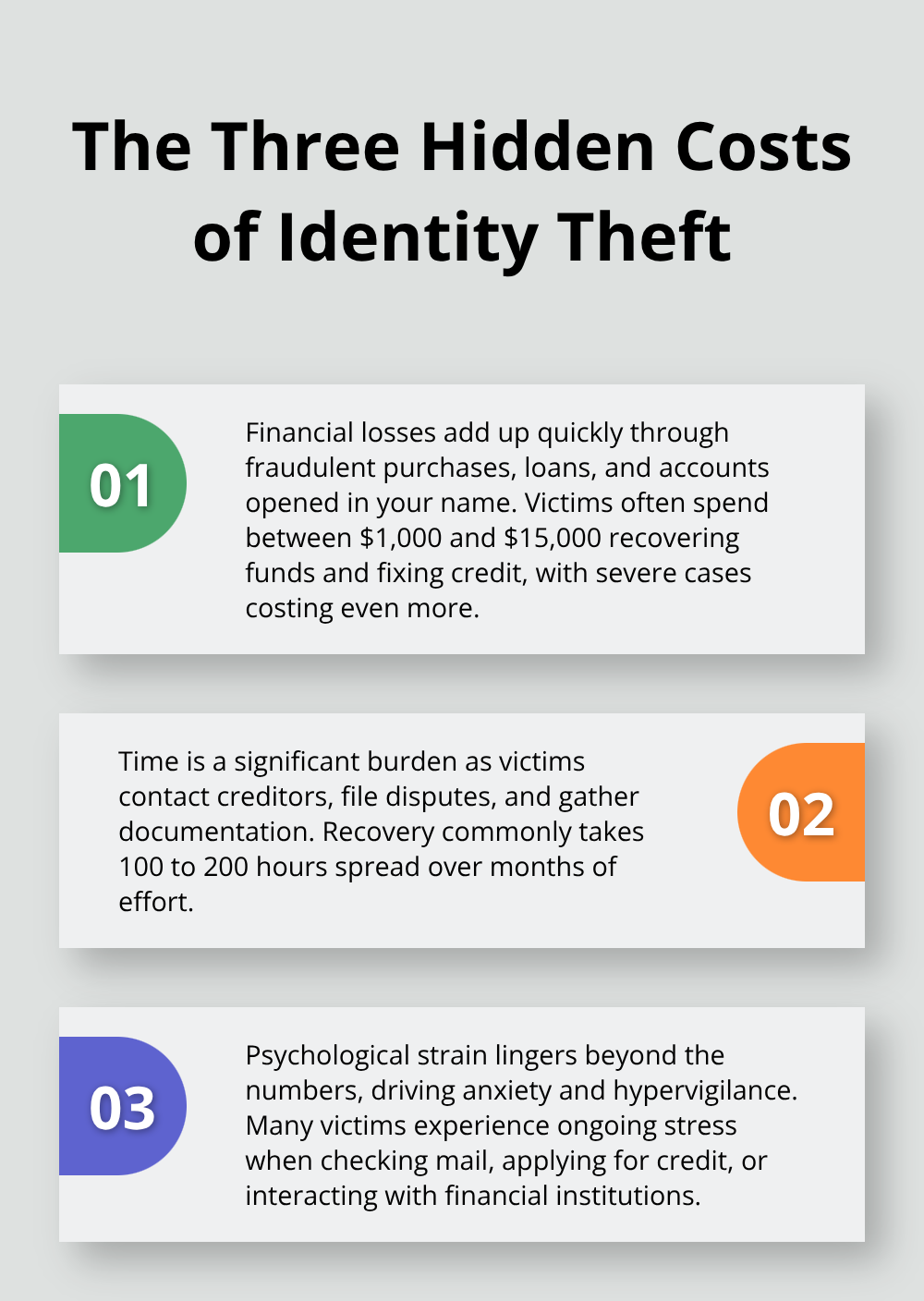
Identity theft drains your bank account and hijacks your financial future simultaneously. When thieves steal your personal information, they open credit cards, take out loans, and make purchases in your name. The Federal Trade Commission reported over 1.1 million identity theft complaints in 2022, and California residents experienced the highest volume of cases that year. The average victim spends between $1,000 and $15,000 recovering from identity theft, though some cases cost significantly more depending on the extent of fraud.
Credit damage proves particularly insidious because it affects your ability to borrow money for years. Lenders see delinquent accounts, maxed-out credit cards, and hard inquiries on your report-all caused by someone else-and either deny you credit or charge higher interest rates. This damage persists on your credit report for up to seven years, even after you resolve the fraud.
The Time Investment Required
Most victims spend 100 to 200 hours over several months contacting creditors, filing disputes with credit bureaus, and providing documentation to prove the fraud wasn’t their responsibility. One California resident discovered $43,000 in fraudulent charges and auto loans opened in her name; she spent two years disputing accounts and rebuilding her credit score from 580 to 720. The time investment required to recover is staggering and often underestimated.
Psychological Impact Beyond Numbers
Identity theft carries psychological weight that shouldn’t be minimized. Victims report anxiety about checking their mail, stress during credit applications, and lingering distrust of financial institutions. The emotional toll often outlasts the financial recovery. Some victims develop hypervigilance about their personal information, constantly monitoring statements and checking credit reports obsessively. This psychological impact is real and valid, even though it doesn’t appear on a credit report or bank statement.
Early Detection Changes Everything
The sooner you detect identity theft, the less damage accumulates. Victims who catch fraud within 30 days typically recover faster and experience fewer unauthorized transactions than those who discover theft months later. Understanding these costs-financial, temporal, and emotional-makes the case for protective action clear. The next section outlines practical steps you can take today to prevent identity theft before it starts.
Practical Steps to Protect Your Personal Information
Monitor Your Credit Reports Strategically
Credit monitoring serves as your first line of defense against identity theft. The FTC allows you to access one free credit report annually from each of the three major bureaus-Equifax, Experian, and TransUnion. Rather than pulling all three at once, stagger them every four months through annualcreditreport.com to maintain continuous monitoring throughout the year. This approach catches fraud faster than waiting for your annual report.
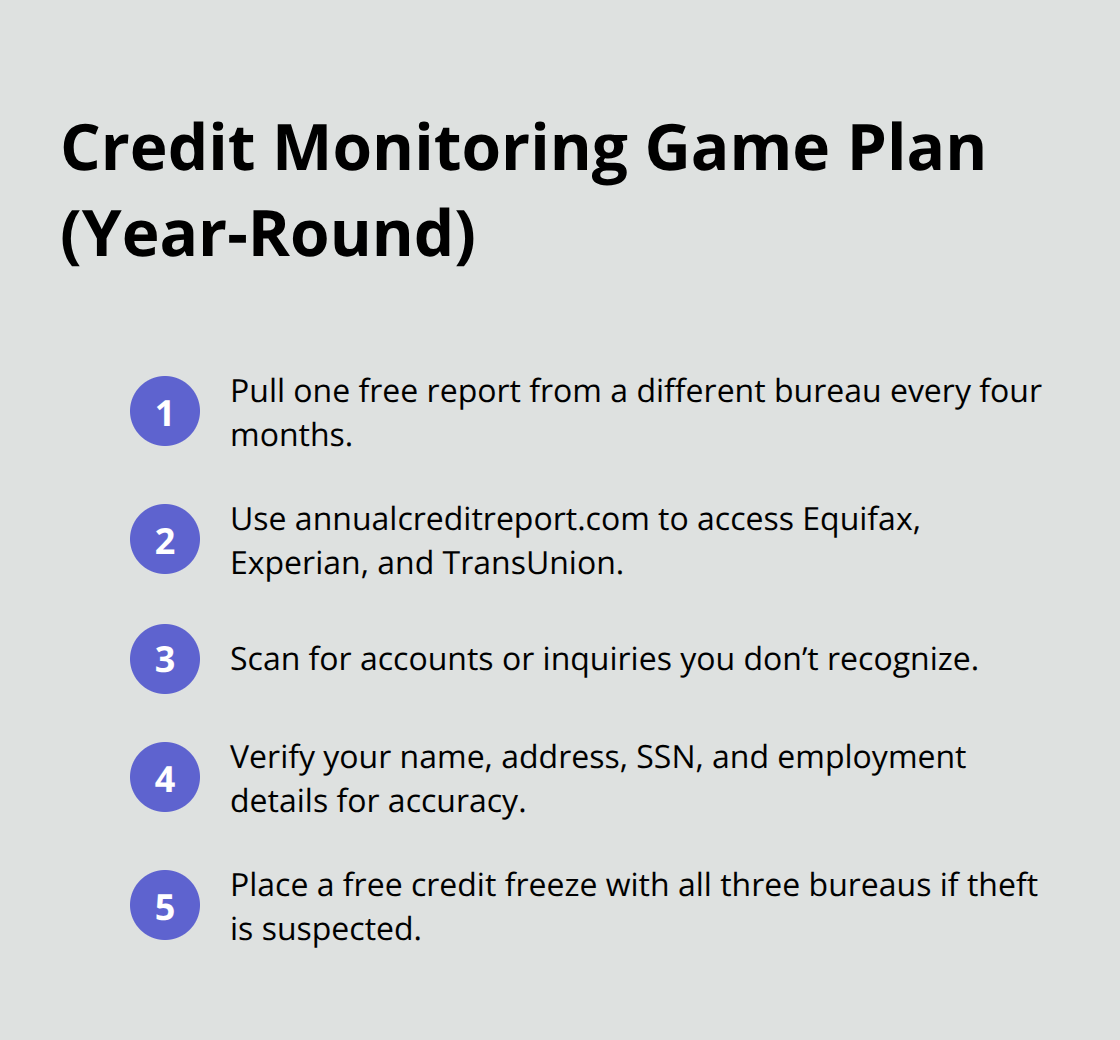
When you review your report, look for accounts you didn’t open, inquiries from companies you didn’t contact, and address changes you didn’t authorize. Verify your name, address, Social Security number, and employment history match your actual information. California residents should place a credit freeze with all three bureaus if identity theft is suspected; freezes prevent new accounts from being opened in your name without your explicit authorization. The freeze is free and remains in place until you remove it, giving you control over who accesses your credit.
Create Passwords That Actually Protect You
Your digital accounts require passwords that resist compromise, not passwords you can remember easily. Use a different password for every account-this single practice limits damage if one company suffers a breach. Create passwords with at least eight characters mixing letters, numbers, and symbols; a password manager like Bitwarden or 1Password stores them securely so you don’t rely on memory or dangerous practices like writing them on sticky notes.
Never share passwords and never respond to requests to verify account numbers or passwords unless you initiated the contact. Phishing attempts arrive constantly through emails, phone calls, and mail where scammers impersonate banks and government agencies. If someone contacts you claiming to be from your bank or the IRS, hang up and call the official number on your statement or website instead.
Secure Your Physical Documents and Mail
Stop pre-approved credit offers by calling 1-888-5OPTOUT or visiting optoutprescreen.com; these offers are theft targets because they arrive with your name and address already printed. Shred documents containing personal information before discarding them, and consider a locked mailbox if your current one is easily accessible.
Missing bills or statements warrant immediate attention-thieves sometimes change your contact information to hide fraudulent activity. Contact your financial institutions and creditors if statements don’t arrive on schedule. This vigilance over your mail and documents creates a barrier that forces thieves to work harder, making your identity a less attractive target compared to careless victims.
Your protective measures establish a foundation, but California law provides additional safeguards specifically designed for residents who fall victim to identity theft. Understanding your legal rights positions you to recover faster and hold responsible parties accountable.
What Legal Protections Do California Residents Have After Identity Theft?
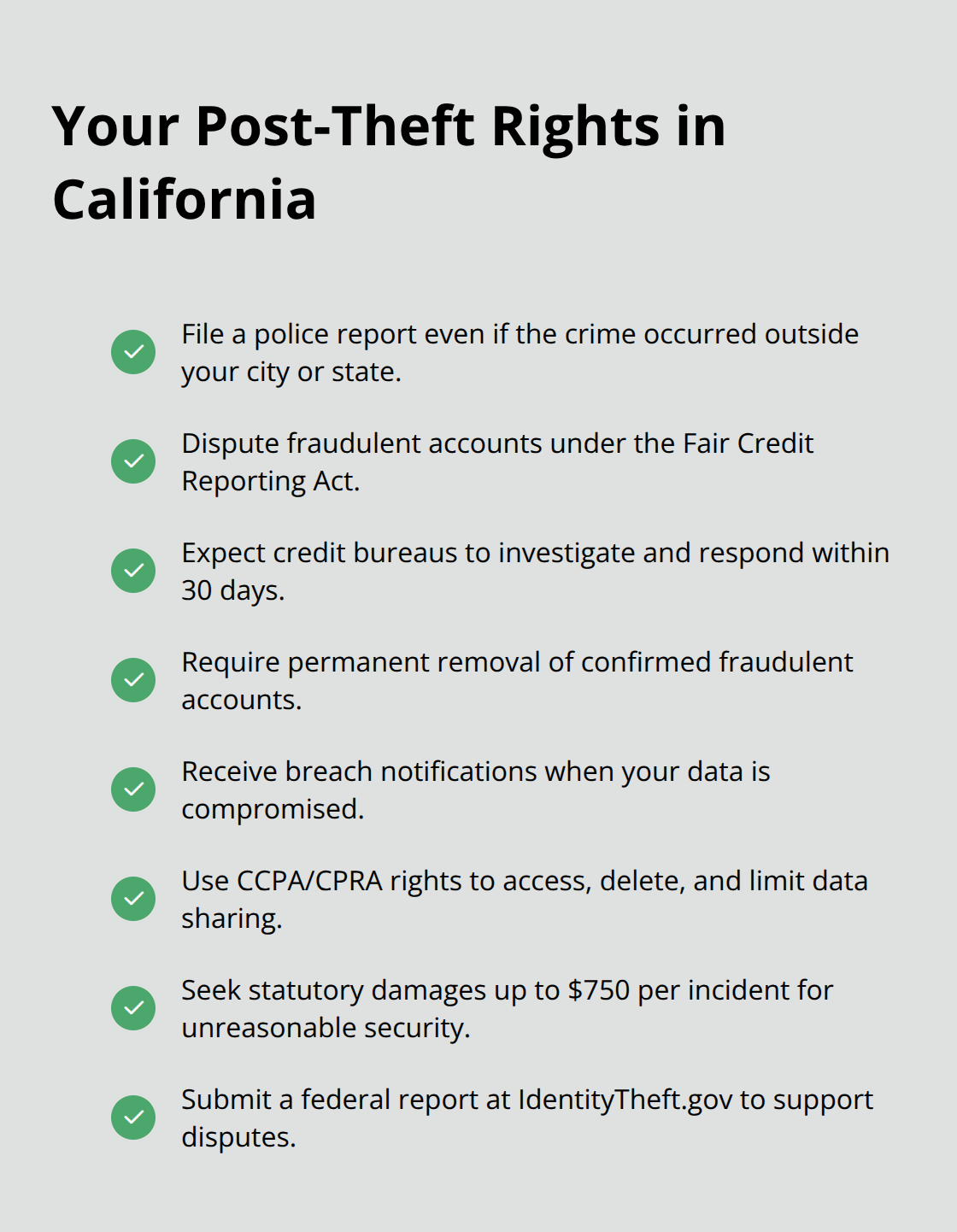
California law treats identity theft as a serious crime, not a civil inconvenience. Penal Code section 530.5 makes all forms of identity theft illegal and provides you with concrete legal remedies that most victims never use. When someone steals your identity, you have the right to file a police report even if the crime occurred elsewhere in the country-a critical advantage because it creates an official record that supports your recovery efforts.
Document Your Identity Theft Claim
The California Department of Consumer Affairs Office of Privacy Protection provides an Identity Theft Victim Checklist and a Guide for Victims of Criminal Identity Theft. These tools help you document incidents and organize your next steps. This documentation becomes essential when you dispute fraudulent accounts because creditors and credit bureaus require proof that you are a victim of identity theft, not someone trying to avoid legitimate debt. Thorough records accelerate your recovery and strengthen your position in disputes.
Challenge Fraudulent Accounts on Your Credit Report
The Fair Credit Reporting Act guarantees your right to dispute inaccurate information on your credit report, and identity theft victims have additional leverage under California law. When you file a dispute with a credit bureau about fraudulent accounts, the bureau has 30 days to investigate and respond. If the investigation confirms fraud, the bureau must remove the fraudulent account from your credit report permanently. This process restores your credit standing and prevents continued damage from accounts you never opened.
Leverage California’s Data Breach and Privacy Laws
California’s data breach notification laws require companies to notify you if your personal information is compromised, providing early warning to take protective action. Under the California Consumer Privacy Act and California Privacy Rights Act, you have the right to request what personal information businesses hold about you, request deletion of that data, and opt out of the sale or sharing of your personal information. These privacy rights prevent future identity theft by limiting how much of your data circulates through the digital economy.
Sue for Statutory Damages When Security Fails
If a business fails to maintain reasonable security and your unencrypted personal information is stolen, California law allows you to sue for statutory damages up to $750 per incident. You must provide a 30-day notice period before filing suit so the company has a chance to respond. This legal remedy holds corporations accountable for negligence and creates financial incentive for them to protect your data properly.
File Your Fraud Report with the FTC
The Federal Trade Commission’s IdentityTheft.gov portal lets you report fraud directly and creates an official record that creditors must recognize when you dispute fraudulent accounts. This federal report complements your state-level police report and strengthens your position across all recovery efforts.
Final Thoughts
Identity theft consumer protection requires action on three fronts: prevention, monitoring, and swift response. The strategies outlined in this guide reduce your risk significantly, but no single tactic eliminates it entirely. Stagger your credit report reviews every four months, use unique passwords for every account, and shred documents before disposal. These habits cost nothing and take minimal time compared to the 100 to 200 hours victims spend recovering from fraud.
Detection speed matters more than perfection because victims who catch unauthorized accounts within 30 days experience substantially less damage than those who discover theft months later. Review your statements monthly, set up account alerts, and take missing bills seriously as potential warning signs. California law supports your recovery efforts through police reports, credit dispute rights, and statutory damages against negligent companies, but only if you act quickly.
When identity theft occurs despite your precautions, you face complex disputes with creditors, credit bureaus, and potentially fraudulent accounts across multiple institutions. Bontrager Law represents California residents in identity theft disputes, credit reporting errors, and related claims against banks and corporations, offering personalized representation starting with a free case review. California residents also have access to the California Department of Consumer Affairs Office of Privacy Protection, the FTC’s IdentityTheft.gov portal, and the State Bar of California’s lawyer referral service at 866-442-2529 for guidance and connections to affordable legal assistance.